News
Using Cadmus to support students affected by COVID-19



Share with colleagues
Download the full Case Study
Take an in-depth look at how educators have used Cadmus to better deliver assessments.
With the Coronavirus affecting Semester 1 preparations (and possibly beyond), we wanted to provide some examples of how Cadmus is being used to support online teaching efforts. Here are two simple ways Cadmus can be used to help you rapidly move your assessments online to ensure accessibility, improve support, and maintain inclusivity for students as the continue their studies online.
Use a Cadmus Template to improve instructional scaffolding
Transferring your assessment into Cadmus using a template is the simplest and easiest way to adapt your task to support students affected by the Coronavirus. By moving your task into a Cadmus Template, you will improve the instructional scaffolding delivered to students, and receive learning analytics on student engagement.
For students who can no longer take advantage of face-to-face help, this additional scaffolding will guide students through the process of completing a task, helping to bridge the gap and create a more positive assessment experience. There are a range of templates available, including Essays, Annotated Bibliographies, Reflective Journals, Case Studies, and more. Learn more about Cadmus Templates.
Set up online activities to supplement tutorials
If your tutorials involve written exercises and in-class discussions, you can transfer these activities into a series of online assignments with Cadmus. Here’s an example:
Steve runs the subject Accounting Information: Risks & Controls with 155 students, some of whom are affected by the COVID-19 travel restrictions. Typically, students complete written activities and participate in discussions during their tutorials. This helps Steve know that his students are continuously engaging. In order to re-create this experience for students in China, Steve converts these tasks into a series of Cadmus Assignments. Steve does this alongside a discussion board and video resources he has created for affected students.
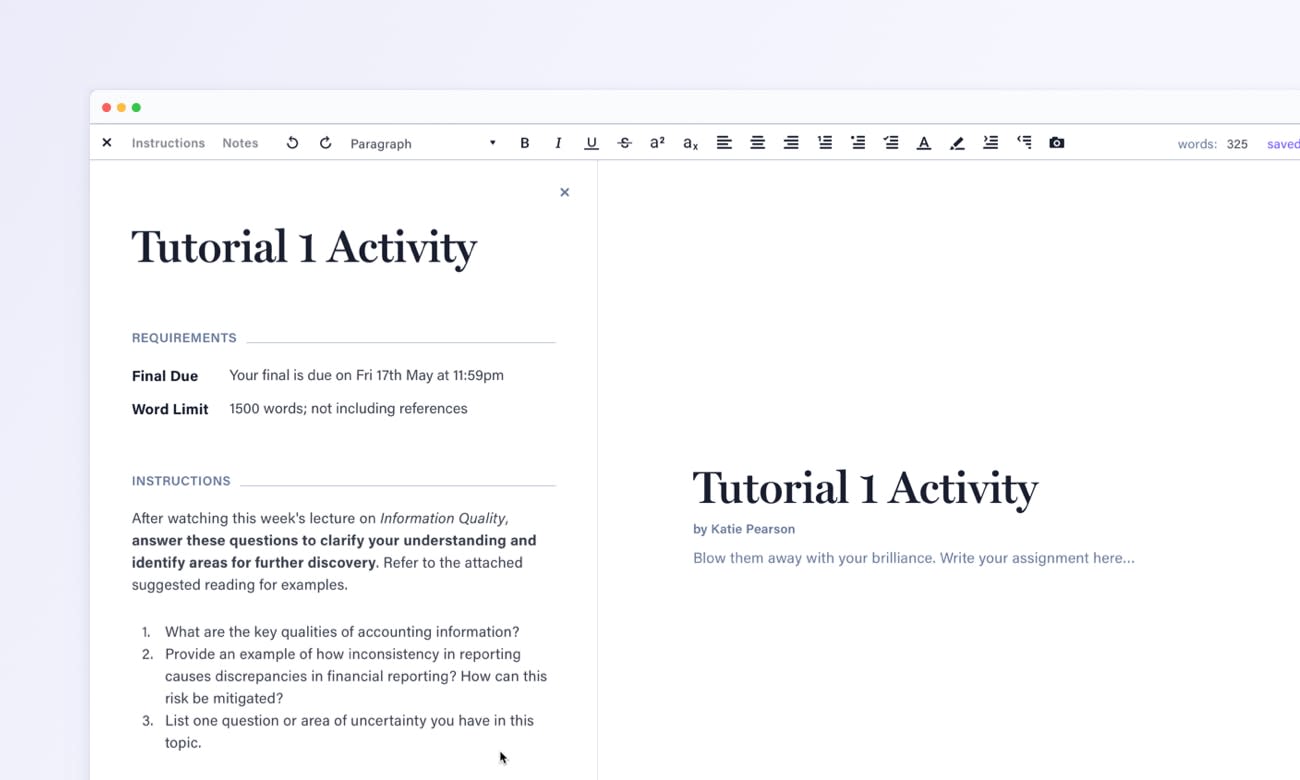
Here’s how he structures his assessment with Cadmus:
-
Steve sets up a Cadmus Assignment in the LMS for students to complete.
-
Students access the task and additional resources in Cadmus, before answering the questions Steve has set out in the instructions.
-
Using Cadmus Learning Analytics, Steve can see how his class is progressing through the task and how students are engaging with resources in Cadmus.
-
His students submit their written responses through Cadmus.
-
Steve reviews a selection of submissions and shares group feedback, along with discussion points from the in-class tutorial.
-
Students refer to the feedback, helping them refine their understanding and continue engaging with the content.
Category
Assessment Design
More News
Load more


Product
How we use data at Cadmus
Being online creates new opportunities to understand how learning happens. Discover how Cadmus uses data to support learning, improve assessment design, and build transparency and trust across every stage of the assessment process.
Cadmus
2026-03-31



Academic Integrity
Leadership
Why detection-first integrity strategies are becoming a sunk cost for universities
In this article, Founder & Co-CEO Herk Kailis puts language to a growing tension across institutions: as the market leans further into detection, the response risks becoming more reactive than strategic. Through a commercial lens, he explores how this is beginning to resemble a classic sunk cost trap, and why the stronger long-term play is to design assessments that are harder to game in the first place.
Herk Kailis, Founder & Co-CEO, Cadmus
2026-03-30


Product update
Company
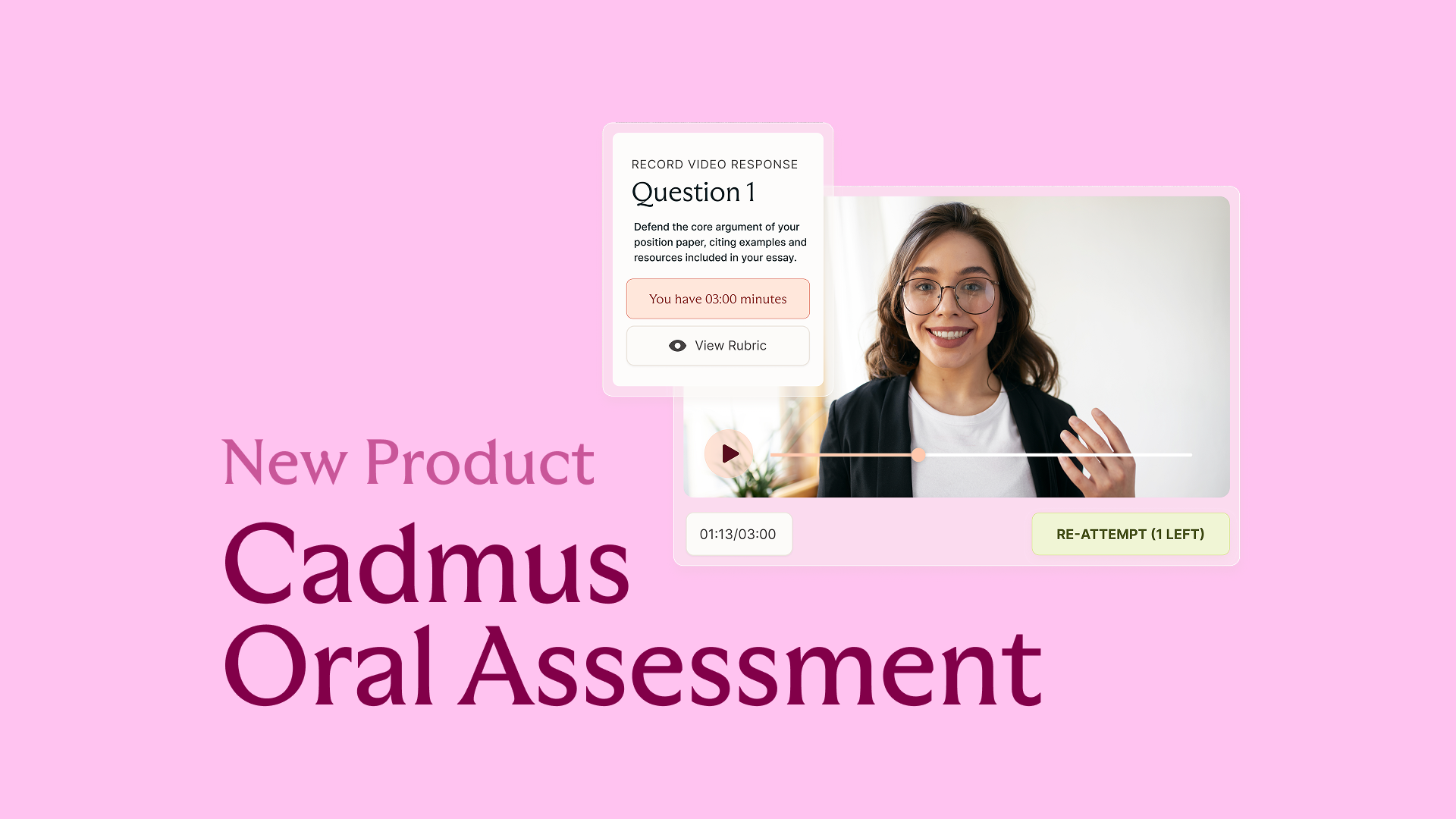
Introducing Cadmus Oral Assessment: Scalable assurance for an AI‑enabled world
Cadmus introduces Oral Assessment: a new approach to strengthening assessment assurance in an AI-enabled world. Starting with scalable, asynchronous vivas, this phased solution embeds targeted oral explanation directly into assessment workflows to provide more credible evidence of student learning.
2026-03-19