News
3 tips for introducing students to Cadmus



Share with colleagues
Download the full Case Study
Take an in-depth look at how educators have used Cadmus to better deliver assessments.
Exams and final assessments can always be a point of stress for students, especially now that many will be completing online alternatives to the usual invigilated exams. As you work away on the design and setup of your online exam alternatives, it's also important to consider how you'll be guiding your students into what will be a very different exam period.
Not only will this help your students feel more comfortable going into their final assessments, but it will also help you feel confident that your assessment will run smoothly.
We've put together a few ways you can ease students' online assessment anxiety, and set them up for success.
Get students into Cadmus early
When it comes to exam day, students should focus on displaying what they have learnt in the unit — not on using new technology. By providing students with an opportunity to go through the entire assessment process in Cadmus before the final exam, they'll have plenty of time to resolve any access issues or answer any questions they may have.
There are few great ways we've seen teachers put this into practice:
-
Use Cadmus for an in-semester assessment like an Essay or Mid Semester Test
-
Ask students to use Cadmus for an online tutorial or workshop activity
-
Set up the practice questions for the final assessment as a Cadmus Assignment
When students are completing practice tasks, try to encourage them to use the same device they will use for the final assessment, and to follow any time limitations if applicable. And if there are any specific actions they'll need to complete in the final task, like opening a resource or uploading an image, ensure they have a chance to practice this too.
Direct students towards support
At Cadmus, we're committed to ensuring students have a positive assessment experience, and part of this involves ensuring that help is always available when needed. All you have to do is point students in the right direction — taking the pressure off you to answer any Cadmus questions.
Our Help Docs and Getting Started video series are a great place to start — we've even got a video specifically for Exam Alternatives. Students can access these materials from within the Student Environment while they work, which means that support is always available at their point of need. And in the unlikely case that students have any other issues, they're encouraged to contact our Support Team at support@cadmus.io.
Talk to students about academic integrity
There's a lot of good research to suggest that students are more likely to engage in academic misconduct when they perceive more opportunities to do so (TEQSA, 2019). This means that talking to students about your expectations and the integrity assurances you have put in place for the assessment can be incredibly valuable.
It can be helpful to remind students that although they aren't completing an invigilated exam, they are still expected to complete all their work independently, in Cadmus. Part of this discussion can include informing students that their submissions will be checked through Turnitin, so it's essential they follow correct academic writing practices.
---
As the end of semester approaches, we encourage you to give your students (and yourself!) plenty of time to get to know Cadmus. And as always, our team is here to support you through this process.
Category
Teaching & Learning
More News
Load more


Product
How we use data at Cadmus
Being online creates new opportunities to understand how learning happens. Discover how Cadmus uses data to support learning, improve assessment design, and build transparency and trust across every stage of the assessment process.
Cadmus
2026-03-31



Academic Integrity
Leadership
Why detection-first integrity strategies are becoming a sunk cost for universities
In this article, Founder & Co-CEO Herk Kailis puts language to a growing tension across institutions: as the market leans further into detection, the response risks becoming more reactive than strategic. Through a commercial lens, he explores how this is beginning to resemble a classic sunk cost trap, and why the stronger long-term play is to design assessments that are harder to game in the first place.
Herk Kailis, Founder & Co-CEO, Cadmus
2026-03-30


Product update
Company
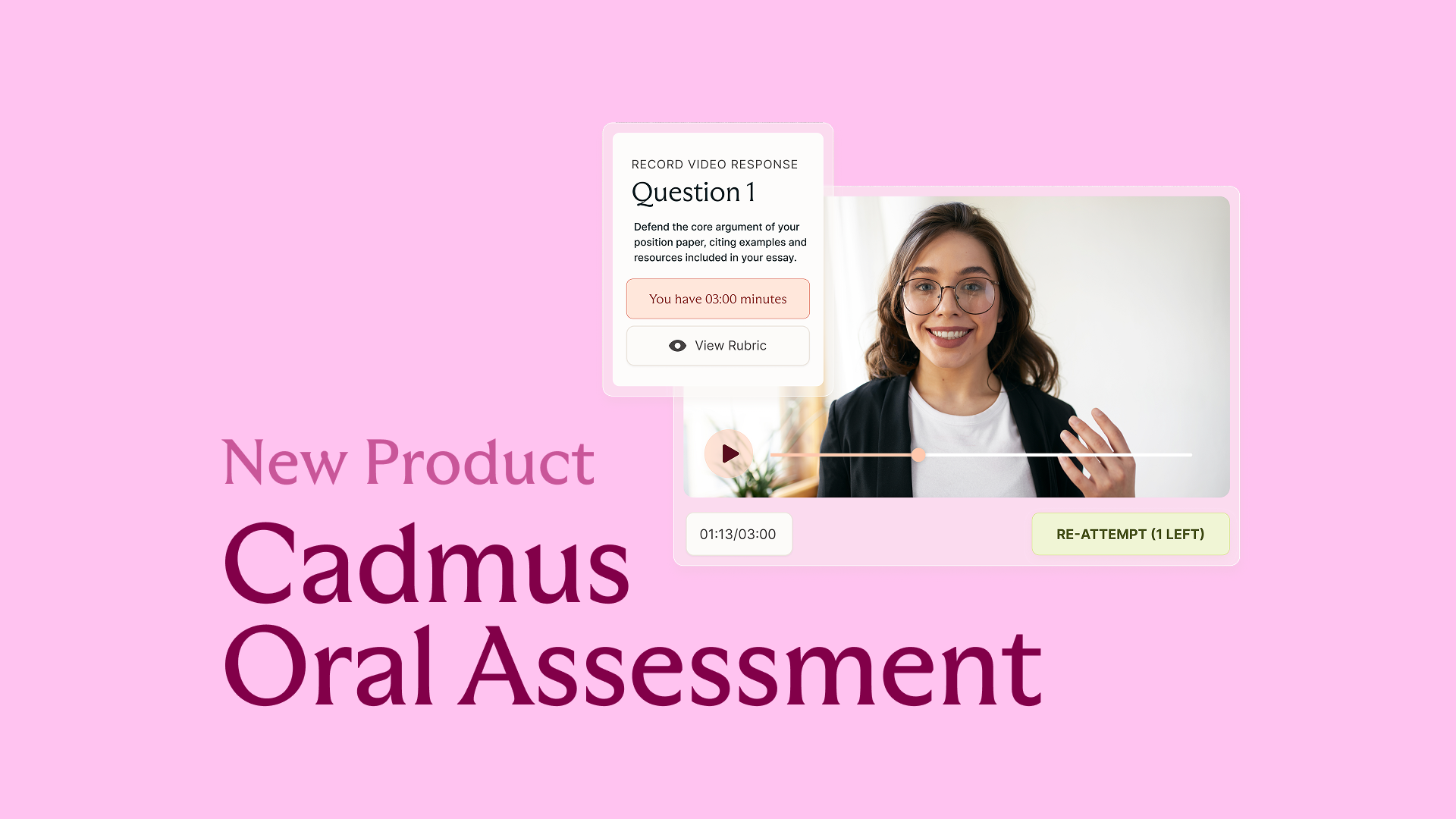
Introducing Cadmus Oral Assessment: Scalable assurance for an AI‑enabled world
Cadmus introduces Oral Assessment: a new approach to strengthening assessment assurance in an AI-enabled world. Starting with scalable, asynchronous vivas, this phased solution embeds targeted oral explanation directly into assessment workflows to provide more credible evidence of student learning.
2026-03-19