News
Using Cadmus to improve your assessments


Share with colleagues
Download the full Case Study
Take an in-depth look at how educators have used Cadmus to better deliver assessments.
Different teachers use Cadmus for different reasons. Some want to engage their students better, some want to easily step their students through more involved assessment tasks. But a lot of them don’t have specific goals — they just know they want to improve the way they do written assessment. So even if you haven’t got a complicated assessment, or the desire to completely change the way your assignment is designed, there’s still a lot you can get out of using Cadmus for your current assessments.
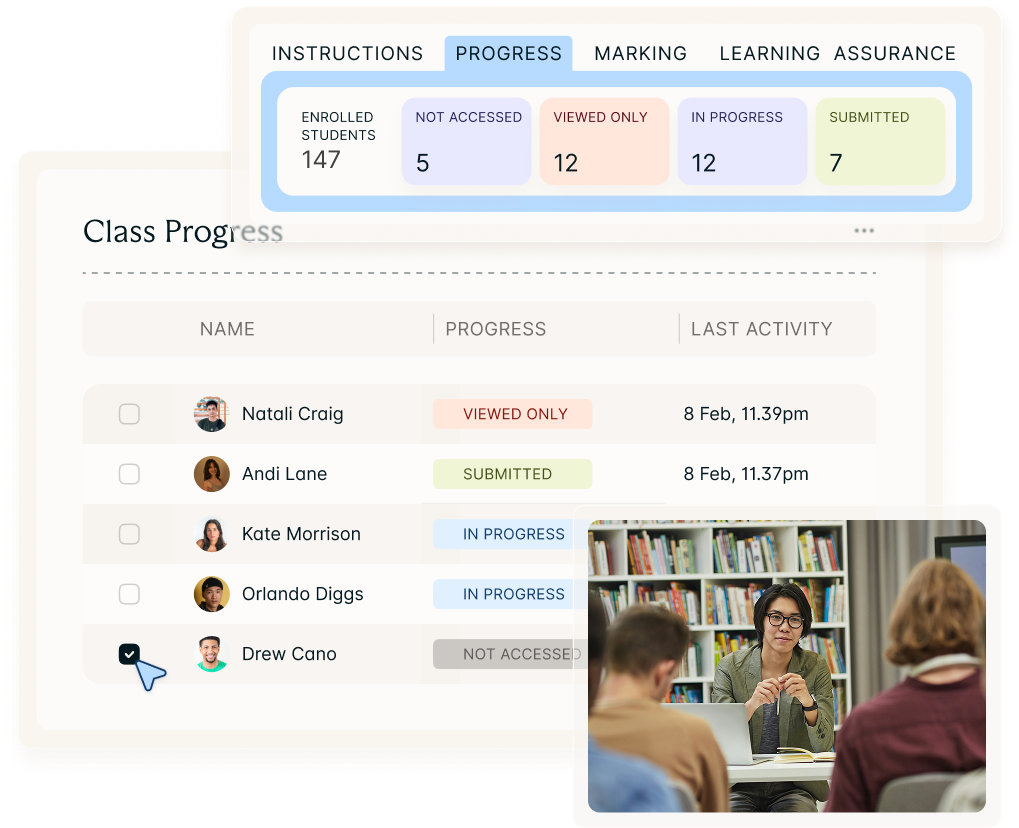
When you use Cadmus, you create assessment tasks that your students complete and submit in the same environment where they find their instructions and resources. It doesn’t just simplify the assessment process for you and your students — it also provides you with learning analytics about how students are working and engaging with an assignment. This means you can actually see whether or not your class is taking the actions you want them to as they work towards achieving the assessment outcomes.
Learning Analytics get delivered to you in two ways — through weekly reports while your assessment is running, and a summary report once your students have all submitted. This gives you the opportunity to guide student behaviour in the middle of an assessment, as well as review and evaluate your assessment to improve it for next time.
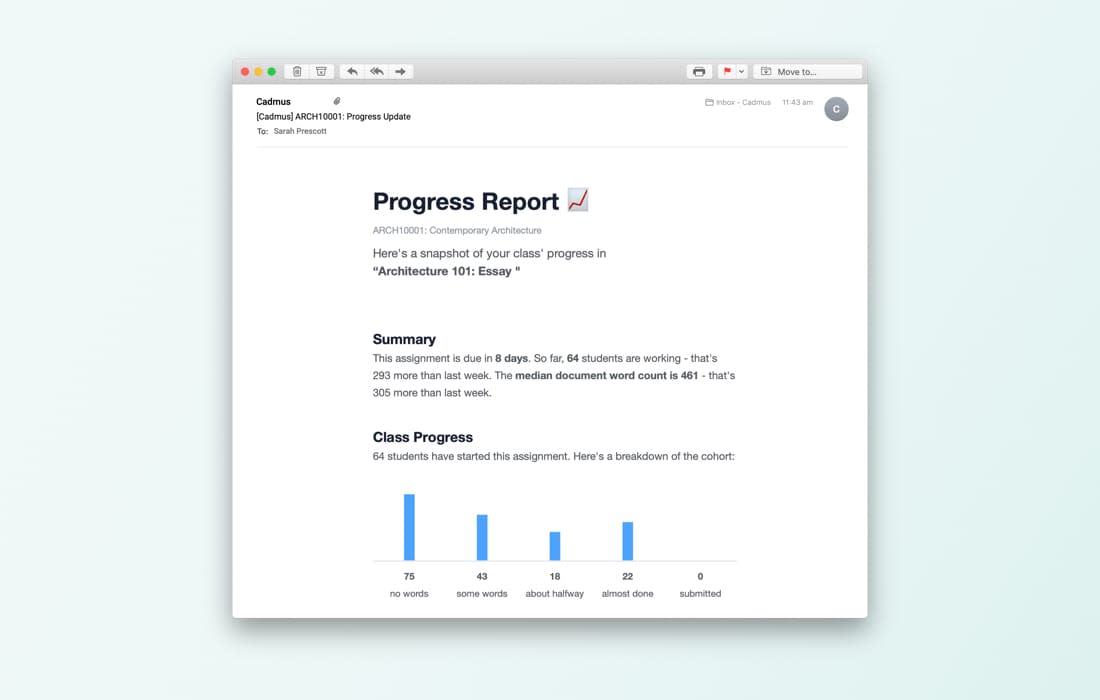 Recieve learning analytics updates throughout the course of an assessment
Here are a few ways teachers have used Cadmus Learning Analytics to guide their students and improve their assessments:
1. I’ve added all these great resources. Is anyone actually using them?
When using Cadmus for an essay, Rachel could see whether her class had actually viewed important resources like the sample essay and marking rubric. In her Cadmus Weekly Report, she saw that less than a quarter of the class had accessed the rubric, so she reminded students in the lecture and posted about it in the LMS. In the following Weekly Report, she saw that over 80% of the class had taken her advice.
2. I released the assignment two weeks ago. Have any of my students started?
David’s class used Cadmus to complete a case study analysis that involved research and a write-up. A week after being released, his Weekly Report showed that very few students had begun working in Cadmus. He used this information, to adapt his tutorial time, asking students to take notes on the case study in Cadmus based on in-class discussions.
3. My students all know how to plan… right?
Penny reviewed the Summary Report for her first-year class’ Cadmus Assignment and noticed that very few students had used the Notes section. When she combined this information with her assessment of her class’ submissions, she realised that students needed more guidance around effectively planning research essays. Next time she teaches the unit, she wants to spend time going through a planning process with students and providing them with useful resources.
---
Cadmus Learning Analytics provide you with another source of information in your teaching evaluation toolkit — helping you develop your understanding of your students’ learning processes.
By using Cadmus you can build in a practice of ongoing review and improvement into your existing assessments. With data to actually evidence how students are engaging, you can act on feedback, and make small adjustments when it matters most — ultimately supporting your students through their learning activities.
Category
Assessment Design
More News
Load more


Product
How we use data at Cadmus
Being online creates new opportunities to understand how learning happens. Discover how Cadmus uses data to support learning, improve assessment design, and build transparency and trust across every stage of the assessment process.
Cadmus
2026-03-31



Academic Integrity
Leadership
Why detection-first integrity strategies are becoming a sunk cost for universities
In this article, Founder & Co-CEO Herk Kailis puts language to a growing tension across institutions: as the market leans further into detection, the response risks becoming more reactive than strategic. Through a commercial lens, he explores how this is beginning to resemble a classic sunk cost trap, and why the stronger long-term play is to design assessments that are harder to game in the first place.
Herk Kailis, Founder & Co-CEO, Cadmus
2026-03-30


Product update
Company
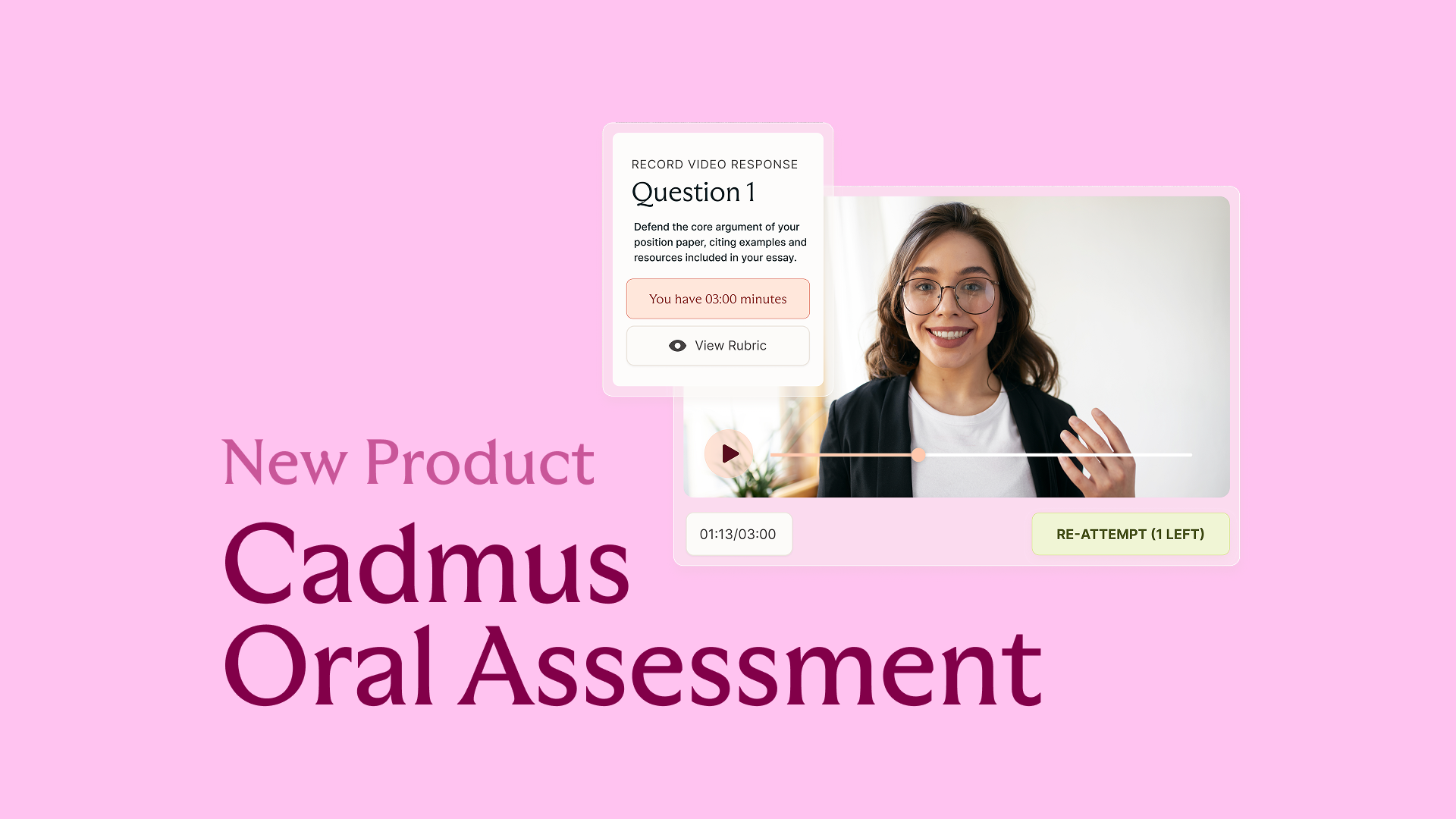
Introducing Cadmus Oral Assessment: Scalable assurance for an AI‑enabled world
Cadmus introduces Oral Assessment: a new approach to strengthening assessment assurance in an AI-enabled world. Starting with scalable, asynchronous vivas, this phased solution embeds targeted oral explanation directly into assessment workflows to provide more credible evidence of student learning.
2026-03-19